Buying
Jump starter or charger: rescue, or prevention
These two tools solve different problems and most households eventually own both, a year apart. A jump starter is a rescue: a large current for a few seconds. A charger — and specifically a maintainer — is prevention: hours or months of holding a battery where it should be. Buy the one that matches how the car is used.
By Jean-Benoit Buisson
Start with the question: does the car sit, or does it run?
If it sits: a maintainer
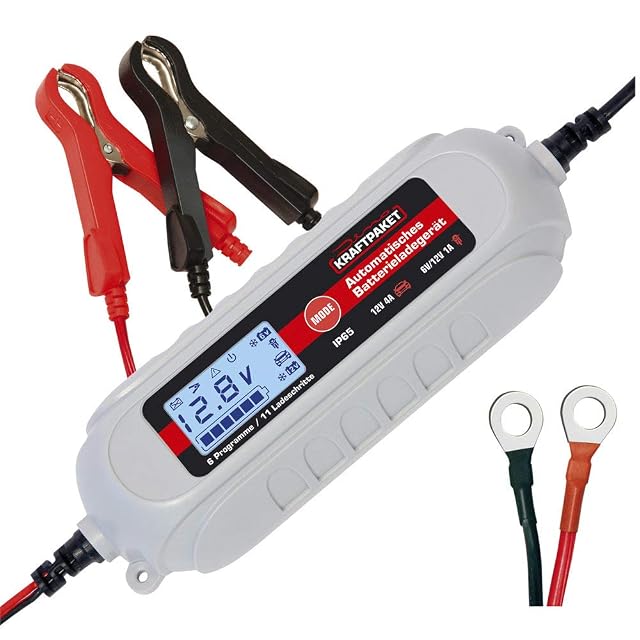
The Dino KRAFTPAKET 4 A charger names its chemistries — lead-acid, wet, MF, gel and AGM including start-stop — holds a float charge, and resumes its programme automatically after a power cut. Four amps is slow on purpose: a maintainer’s job is months, not hours.
If it runs and occasionally lets you down: a pack
The Dino KRAFTPAKET 600 A starter is the only pack here that publishes figures you can compare: 600 A starting current, 66.6 Wh of capacity and a stated maximum of twenty attempts. Sixty-six watt-hours also sits under the 100 Wh threshold airlines commonly apply.
If the battery is AGM, or the car is worth keeping
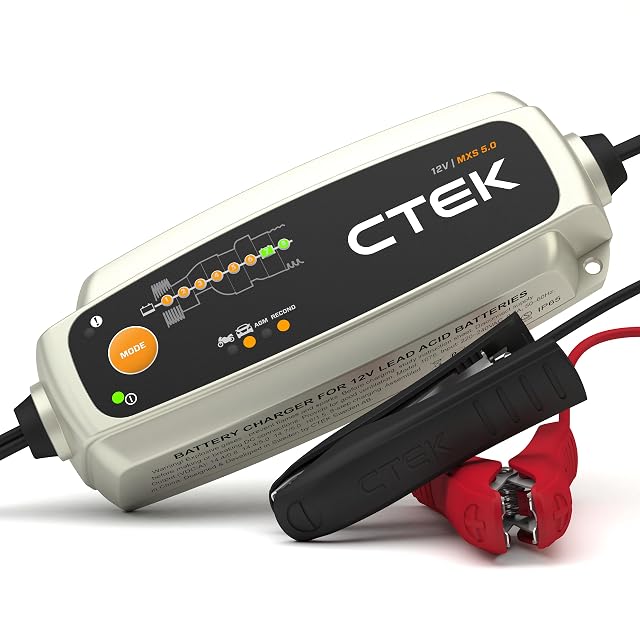
The CTEK MXS 5.0 adds temperature compensation, which is the feature nothing else at this price has — correct charging voltage depends on temperature, and a charger that ignores it undercharges in a cold garage all winter.
If the pack has to live in a pocket
The AstroAI B8 is stated at 329 g and publishes an operating range of −20 to 50 °C, which is the specification that matters on the morning it is needed.
Before any of it
Test the battery. The TOPDON BT100 runs battery, cranking and charging tests in seconds, and it is the cheapest way to find out which of the three problems you actually have.
The check that costs nothing
Clean, tight terminals. A surprising share of no-starts is a green crust rather than a dead battery.